
Do You Need a Permit to Remove a Tree in West Tennessee?
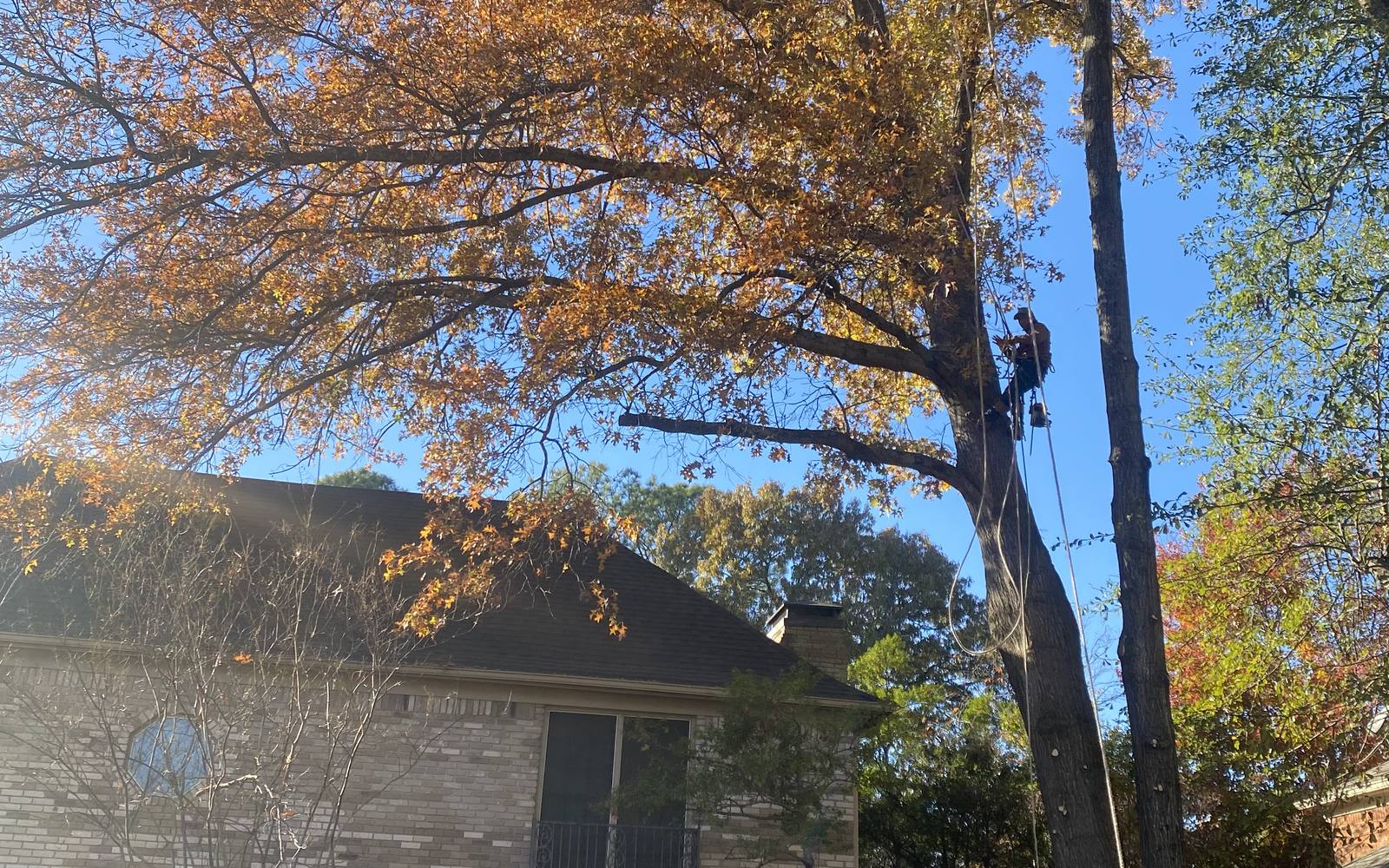
If the tree is on a normal residential lot with a house on it, and that property sits in Memphis or in unincorporated Shelby County, you almost certainly do not need a permit. The Memphis and Shelby County Unified Development Code exempts tree removal on a residential lot or parcel that contains an existing dwelling and is ten acres or less, and the exemption is unusually clean: no notice of intent, no tree survey, no tree permit.
That covers most people who land on this page. The rest of it is written for the ones it does not cover, because the exemption runs out in four specific places: the size of the parcel, whether there is a house on it, which side of a city line you are on, and what you plan to do with the wood afterwards. Those are the four that actually generate fines around here, and none of them is what people expect.
The Actual Rule in Memphis and Unincorporated Shelby County
Memphis and the unincorporated parts of Shelby County share a single zoning code, the Unified Development Code, usually shortened to the UDC. Chapter 6.1 is the tree removal chapter. It opens broadly, stating that it applies to all tree removal in the unincorporated areas of Shelby County and the City of Memphis, and then immediately lists nine exceptions that require no notice of intent, no tree survey and no tree permit.
Two of those nine are the ones homeowners care about:
- Exemption 1. Tree removal on a residential lot or parcel containing an existing dwelling, used for that purpose, which is ten acres or less in size.
- Exemption 3. No more than five trees per acre removed on any lot or parcel containing an existing structure.
Read exemption 1 twice, because the wording is doing real work. It says containing an existing dwelling, used for that purpose. A house you live in qualifies. A vacant lot you just bought does not, no matter how small it is. That single clause is the difference between a free Saturday and a code citation, and it is the one thing on this page worth remembering if you remember nothing else.
The code also exempts removal that is incidental to development on a residential parcel of two acres or less, removal incidental to development on a subdivided residential lot, and property zoned EMP, WD or I-H. Outside those carve-outs, Chapter 6.1 states plainly that it is unlawful to begin removing an existing tree without an approved tree removal permit.
Where the Exemption Runs Out: Acreage and Bare Land
This is the version of the question we actually get asked, and it almost never comes from somebody with one dead oak in a back yard. It comes from somebody who just closed on fifteen acres off a county road and wants it opened up.
Once you are outside the exemptions, the UDC process has real steps with real lead times:
- A notice of intent filed with the Zoning Administrator no more than 45 and no less than ten working days before any tree comes down. Ten working days is two full weeks on a calendar, so this is not a Friday afternoon decision.
- A tree survey, unless it is waived.
- A development plan identifying the species, diameter at breast height and location of every existing tree of ten inches DBH or greater proposed for removal and for preservation, along with grading, tree protection measures, utilities and easements.
- Conformance with the tree removal matrix, which caps how much of a site you may strip before a permit is triggered.
The matrix is the part that surprises people, so here it is in plain numbers:
| Proposed use | Maximum disturbed area (perimeter / remainder of site) |
|---|---|
| Single-family, 10,000 sq ft or less | 0% / 100% |
| Single-family, over 10,000 sq ft | 0% / 80% |
| Multifamily | 0% / 80% |
| Office or institutional | 0% / 90% |
| Retail | 0% / 90% |
| Agricultural, including tree harvesting | 0% / 100% |
Every single row reads zero percent on the perimeter. The code allows a maximum of two access points no wider than 30 feet each to get equipment onto the site, plus one stream crossing no wider than 20 feet every 200 feet inside a streamside management zone, and that is the extent of it. You can clear the middle of a parcel generously and still trip the permit by taking the tree line along the road or the fence.
None of this means acreage work is hard to do legally. It means the paperwork has a two week lead time and somebody has to understand the matrix before the machine shows up. When we quote land management or forestry mulching on a parcel in the county, this is part of the conversation on the first visit rather than a surprise in week three.
The Suburbs Write Their Own Rules, and They Are Not the Same
Here is the fact that nothing else on page one of a search result will tell you. The UDC governs Memphis and unincorporated Shelby County only. Bartlett, Collierville, Germantown, Lakeland, Arlington and Millington are separate municipalities running their own codes. The ten acre exemption does not travel across a city line.
Collierville is the cleanest illustration, because its numbers are different in both directions. Collierville exempts a tree proposed for removal that is located on a residential lot of one acre or less. One acre, not ten. And its permit provision attaches to removal of trees eight inches or greater in diameter at four and a half feet above ground where the work involves land development activities of one acre or more, or relates to an approved site plan, preliminary subdivision plat or subdivision infrastructure construction plan. Eight inches, not ten.
So a homeowner on two acres gets a different answer depending on whether the mailbox says Memphis or Collierville, and the trigger diameter moves by two inches across the same metro. That is the whole reason a national article cannot answer this question for you, and why the ones currently ranking for it are answering for Pennsylvania, Seattle, Dayton and Portland instead.
We are not going to quote ordinances we have not read, so we will say this plainly: if your property is inside any city limit other than Memphis, call that city's planning or codes office before the saw comes out. It is a five minute phone call and it is free. Ask two questions. Does this city require a permit to remove a tree on a developed residential lot, and is there a diameter or lot size threshold.
Tipton County Is a Different Jurisdiction Entirely
Worth stating because our service area straddles the line and people mix these up constantly. Millington is in Shelby County. Atoka, Munford, Covington and Brighton are in Tipton County, which is a separate county government with its own regulations, and the towns inside it have their own on top of that.
Nothing in the Memphis and Shelby County UDC applies to a property in Atoka. If you are north of the county line, the Shelby County answer is not your answer, and the right call goes to your own town hall or the Tipton County offices.
The Permit Most People Actually Do Need
Here is the irony. The homeowner who needed no permit to take the tree down frequently does need one about an hour later, and almost nobody knows it.
From October 15 through May 15, the Tennessee Department of Agriculture Division of Forestry requires a burn permit before you burn leaves, brush, limbs or other woody vegetation. It is free. You can get it at BurnSafeTN.org, which issues seven days a week from 8 a.m. to 11 p.m., or by calling 877-350-BURN (2876) Monday through Friday, 8 a.m. to 4:30 p.m. Central. Permits are issued for the day on which you obtain them, so get it the morning you intend to burn, not the week before.
Two things people get wrong about this. First, if permits are not being issued in your county on a given day, that is not a glitch, it is the state telling you conditions are hazardous. Second, the state permit is a floor and not a ceiling: municipalities and counties add their own burning rules, and city limits are where those bite hardest. A burn that is perfectly legal on a county parcel can be flatly prohibited four miles away inside a city.
Burning is also rarely the cheapest way to deal with the pile. A mature hardwood produces more volume than people picture, it burns badly while green, and a brush pile sitting through a wet West Tennessee winter is still going to be there in March. Hauling it is usually faster, which is why debris removal is quoted alongside the removal itself on most of our tree services jobs.
Four Things That Stop a Removal and Are Not Permits
Permits are the question people ask. These are the things that actually stop the job, and three of the four show up after somebody has already paid a deposit.
- Power lines. Not a permit issue, a utility issue and a safety one. Never trim or fell anything near a line yourself. In MLGW territory the number is (901) 544-6549, and the boundary between what they handle and what stays yours is specific enough that we wrote it up separately in our guide to whether a leaning tree is actually dangerous.
- HOA covenants. A private contract rather than a public permit, which means no city office will warn you about it and the HOA can be stricter than the code. In newer subdivisions around Collierville, Arlington and Lakeland, the covenant is more often the binding constraint than anything in the zoning code. Check your covenants, not just your city.
- The tree is not entirely yours. If the trunk straddles a property line, it is generally not yours alone to remove, and that remains true no matter how much of the canopy hangs over your roof. Tennessee gives you more room than most states to cut back encroachment to the line, but cutting the trunk is a different act with different consequences.
- Street trees in the right-of-way. That strip between the sidewalk and the street usually is not your land. Under the UDC, a party that destroys or substantially damages a street tree inside the right-of-way that is required under the code has to replace it with a specimen of at least two inches DBH, and the code is explicit that this includes work performed by the City, the County and utility companies. Substantially damages is defined as the tree dying within one year of the damage, so a bad root cut counts even though the tree is still standing when you leave.
What Happens If You Needed a Permit and Skipped It
The honest answer is that enforcement falls hardest on development, not on homeowners, which is exactly why the homeowner exemption is written as broadly as it is. But the teeth are real and worth knowing.
Chapter 6.1 is enforced by the Zoning Administrator, who can issue a City or County ordinance citation and a stop work order. Violations can be the basis for withholding a final inspection permit and certificate of occupancy until the problem is corrected, and can be pursued through Environmental Court. On top of that come the replanting obligations, and these are the expensive part:
- Any disturbed area cleared without the permit it required has to be mitigated, with perimeter areas reforested at a minimum of two times the estimated caliper inches of what was taken out.
- A tree removed beyond the matrix under an approved development plan has to be replaced with four live trees of at least two and a half inch caliper each.
Multiply that second rule across a cleared tree line and the number stops being theoretical quickly. If you are holding a certificate of occupancy hostage to a replanting schedule, the cost of a two week notice of intent looks like nothing.
The Ten Minute Check Before You Call Anyone
You can settle this yourself, in this order:
- Find out which jurisdiction you are actually in. A Memphis mailing address is not the same as being inside the city limits, and plenty of Shelby County property with a Memphis address is unincorporated. Your property tax bill or the county assessor's parcel record will tell you.
- Confirm there is a dwelling on the parcel and check the acreage. House plus ten acres or less, in Memphis or unincorporated Shelby County, and you are done. The assessor's record carries the acreage.
- If you are inside another city, call its planning or codes office. Ask the two questions above and write down who told you.
- If there is no house on it, or it is over ten acres, budget two weeks before anything comes down, and get the notice of intent moving first.
- If you intend to burn, pull the permit the morning of, and check whether your city allows it at all.
One thing we will not do is tell you that you need a permit when you do not. A tree service that implies the paperwork is complicated and that only they can navigate it is selling you something. For most of the people who call us, the regulatory answer is simply no, and the real question was always whether the tree needs to come down at all.
Getting It Looked At
Outdoor Services Group has worked on properties across West Tennessee since 2008. We are family-owned, licensed and insured, and we handle removals near structures and power lines with the rigging to bring a tree down in controlled pieces rather than dropping it and hoping.
If you are clearing acreage rather than taking out one tree, the permit question is only the first of several, and the cost side is covered in our guide to land clearing cost per acre in West Tennessee. Alongside tree services we handle vegetation and brush management, minor excavation and grading, and 24-hour storm cleanup.
Call (901) 350-5116 or reach us through our contact page for a free, no-obligation estimate. We serve Millington, Atoka, Munford, Covington, Brighton, Arlington, Bartlett, Lakeland, Germantown, Collierville and the greater Memphis area.
Rules change and this is general information rather than legal advice. The provisions described here come from Chapter 6.1 and Section 11.4 of the Memphis and Shelby County Unified Development Code, Sections 151.267 and 151.269 of the Collierville Code of Ordinances, and the Tennessee Department of Agriculture Division of Forestry. Confirm the current requirement with your own city or county before work begins.
Frequently Asked Questions
Ready to Get Started?
Contact Outdoor Services Group for a free, no-obligation estimate on any of our outdoor services in Tipton County and Shelby County.