Do You Really Need to Winterize a Sprinkler System in West Tennessee?
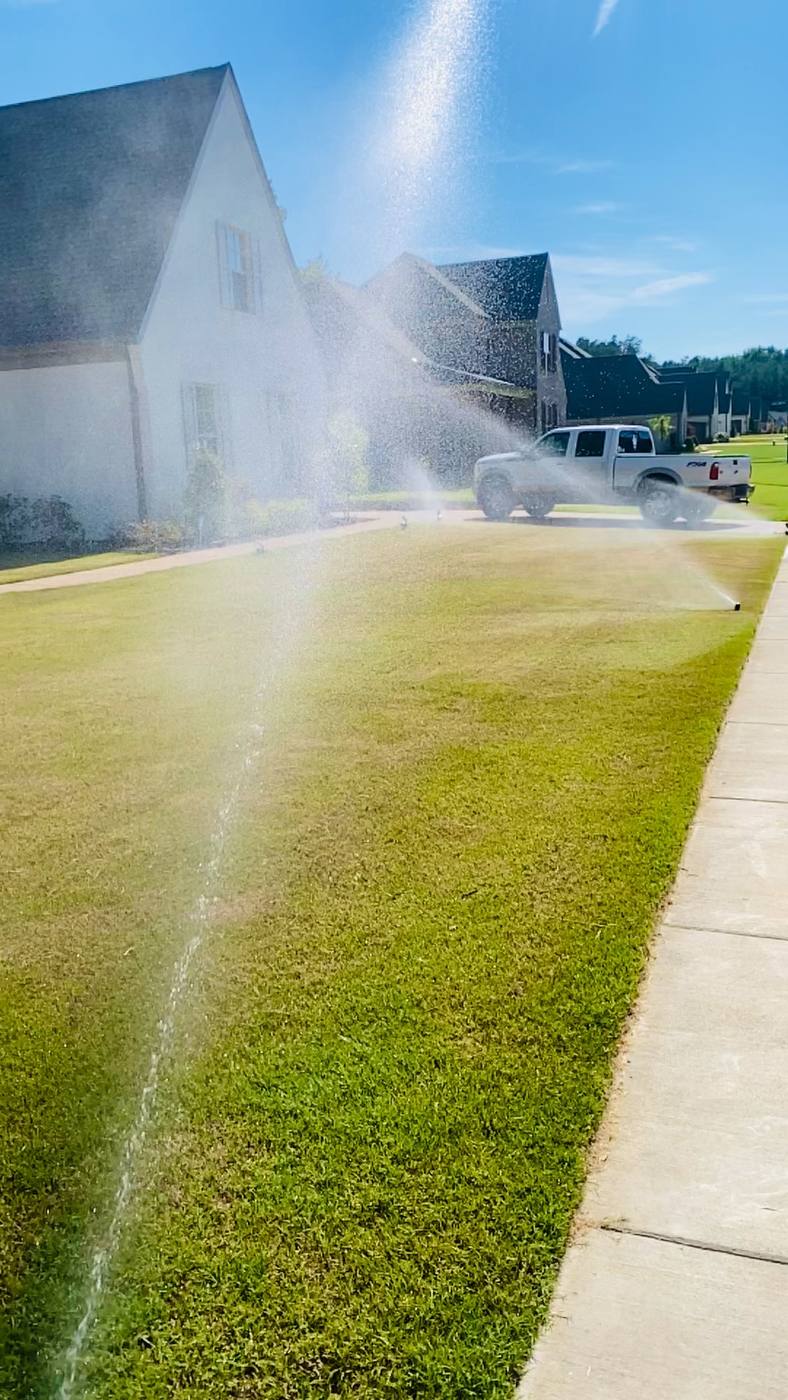
Yes, but most likely not the way the internet tells you to. The advice you will find on the first page of search results was written for Denver, Boise, and the Pacific Northwest, where the ground freezes deep and a full compressed-air blowout is genuinely mandatory. West Tennessee is a different climate, and the part of your system most likely to crack here is not the buried pipe. It is the backflow assembly sitting above ground next to your house.
Most homeowners pay between $59 and $144, though a large system that needs a full compressed-air blowout can run to $215. And the date that matters is November 12: that is the average first freeze in Memphis, which makes late October the working deadline.
The Short Answer for West Tennessee
Three things are true here that are not true in a Northern market:
- Your buried lateral lines are at lower risk. They are below grade, the freeze does not push as deep here, and a properly sloped system with working drains sheds most of the water on its own.
- Your above-ground components are at full risk. The backflow preventer, the exposed riser, and any valve in a shallow box will freeze solid in a single hard night. These are also the most expensive pieces to replace.
- You have less warning. Memphis can run to mid-November without a freeze and then drop overnight. There is no long cold ramp to remind you.
So the honest answer is not "you must blow out your system." It is "you must get the water out of the parts that will crack, before the first hard freeze, and for most systems here that is a smaller job than the national guides describe."
When to Winterize in West Tennessee
The National Weather Service office in Memphis puts the average first fall freeze at 32°F on November 12. The extremes are what should actually drive your scheduling:
- Earliest first freeze on record: October 16, 1952
- Latest first freeze on record: December 11, 1994
An average is not a deadline. If you schedule for November 10 because that is the average, you are accepting a real chance of losing the bet. The sensible target for Tipton, Shelby and the surrounding counties is the last week of October through the first week of November. That puts you ahead of all but the most extreme early freeze, and it is before the phones start ringing for everyone else.
One caveat worth knowing: you do not need to shut down the moment the temperature touches 32°F. A light frost will not split a pipe. What does damage is a sustained hard freeze: several hours well below freezing, which is what arrives with the first real cold front rather than the first cool night.
What Sprinkler Winterization Costs
Two things drive the price: how many zones you have, and which method your system needs.
| Number of zones | Typical cost |
|---|---|
| 1–2 zones | $50 – $75 |
| 3–4 zones | $80 – $100 |
| 5–6 zones | $100 – $130 |
| 7–8 zones | $150 – $250 |
| Method | Typical cost |
|---|---|
| Manual drain | $70 – $150 |
| Automatic drain | $75 – $165 |
| Compressed-air blowout | $85 – $215 |
LawnStarter reports that most homeowners pay between $59 and $144 overall, and HomeGuide puts a basic blowout at $50 to $150 with roughly $5 to $10 for each zone beyond a standard package. Spring reactivation is a separate visit, generally $45 to $140.
If you are pricing this out, ask whether the quote includes spring startup. Some companies here sell the two visits together as a seasonal package, which is usually cheaper than booking them separately and means someone is checking the system on the way back in.
Blowout vs. Draining: Which One You Actually Need Here
What a compressed-air blowout does
A blowout pushes air through each zone at controlled pressure until the heads run dry, forcing standing water out of the laterals. It is the most thorough method and it is the right call for systems with flat runs, low spots, or no working drain valves.
It also requires a real compressor. This is the part that catches people out: a pancake compressor from the garage will not do it. Moving enough volume to clear a zone takes a machine most homeowners do not own, and running a small compressor at high pressure to compensate is how heads and fittings get destroyed. Rental runs $30 to $60 a day, which is most of the way to just having it done.
When draining is enough in West Tennessee
Plenty of systems in this area do fine on draining alone. If your system has functioning manual or automatic drain valves at the low points and the laterals are properly sloped, opening the drains and shutting off the supply gets the water out without any air at all.
The honest test is whether you know your system has working drains and where they are. If you do, draining is very likely sufficient here. If you do not, which describes most people who bought a house with the system already in it, the safe answer is to have someone look at it once and tell you what you have. After that first visit, you will know which camp you are in for every year after.
Either way, the supply line gets shut off and the controller gets set to the off or rain position so it is not trying to run a dry system in January.
The Backflow Preventer Is the Part That Actually Freezes
This is the piece the national guides underweight and the piece that matters most in a mild climate.
Your backflow preventer sits above ground. It is brass or plastic, it holds water, and it has no soil around it to buffer the cold. When Memphis drops into the low twenties overnight, the buried pipe four inches down is fine and the assembly on the wall is the thing that splits. Replacing one is not a small bill, and it is the single most common freeze failure on irrigation systems in this part of the state.
There is a second reason to care about it, and it is one no other cost guide mentions.
MLGW requires it to be there and to be tested. MLGW's Cross Connection Control Program explicitly lists an "underground irrigation system" as evidence of a cross-connection concern on residential property, which means the property has to be isolated from the public water system. Reduced Pressure assemblies "must be tested within a 12 month period," and testing is required "At start up for irrigation systems." Only a tester holding a Tennessee Certificate of Competency and approved by MLGW can perform that test.
The enforcement is not a fine. MLGW's language is that "water service will be discontinued until conditions are in line with MLGW's Cross Connection Control Program," with a reconnect fee added to the bill afterward.
So a split backflow assembly in January is two problems: the repair, and a compliance gap you have to close before your system can legally run again in the spring.
Two practical notes. First, this applies to MLGW customers, which covers Memphis and much of Shelby County. Millington, Atoka, Munford and Covington run their own water systems, so check with your provider if you are outside MLGW's territory. Second, backflow testing is a separately certified activity. We handle irrigation winterization and can tell you what condition your assembly is in, but the annual certification test needs a state-certified backflow tester. Anyone who tells you otherwise is not someone you want touching it.
What You Can Do Yourself, and Where It Stops
Genuinely DIY, no equipment needed:
- Shut off the irrigation supply valve
- Set the controller to "off" or "rain mode" so it stops trying to run
- Open manual drain valves if you know where they are
- Insulate the backflow assembly with an insulated cover or wrap: this is cheap and it is the highest-value thing a homeowner can do here
Where it stops being a homeowner job:
- Any blowout, because of the compressor requirement and the real risk of damaging heads with too much pressure
- Systems where you cannot locate the drains or do not know the layout
- Anything involving the backflow assembly beyond insulating the outside of it
- Systems on a well or a pump, which have their own shutdown sequence
If you are on the fence, the deciding question is simple: do you know where your low points and drains are? If the answer is no, one professional visit buys you that knowledge permanently.
Getting on the schedule before the first freeze is the whole game. We provide free estimates across Tipton County, Shelby County and the surrounding West Tennessee communities. Call (901) 350-5116 and we will get you set before the cold front does.
What It Costs to Skip It
A freeze failure is not usually one broken thing. Water expands where it sits, so the damage shows up at whatever was holding water: a cracked backflow assembly, a split valve, a fractured riser, heads that no longer seal. You often do not find out until you turn the system on in April and a zone floods the yard.
The asymmetry is the point. Winterization is a two-figure or low three-figure service. A backflow replacement plus valve repairs is not. And if you are running new sod installation or a recently planted landscape, a system that does not come back in the spring costs you more than the repair.
Vacant and seasonally occupied properties deserve a specific mention. They are the most common freeze losses we see, because nobody is there to notice a problem until the water bill arrives. If you own a rental, an inherited house, or a property that sits empty part of the year, winterizing the irrigation is worth pairing with a broader property safety check before winter.
Getting on the Schedule
The window in West Tennessee is late October into the first week of November. It is short, it closes without much warning, and every irrigation contractor in the Memphis area is working through the same three weeks.
Outdoor Services Group has been maintaining properties in West Tennessee since 2008. We are family-owned, licensed and insured, and our crews work in English and Spanish. Alongside irrigation services we handle lawn care, sod installation, and property safety checks across Millington, Atoka, Munford, Covington, Brighton, Arlington, Bartlett, Lakeland, Germantown, Collierville and the greater Memphis area.
Call (901) 350-5116 or reach out through our contact page for a free estimate.
Frequently Asked Questions
Ready to Get Started?
Contact Outdoor Services Group for a free, no-obligation estimate on any of our outdoor services in Tipton County and Shelby County.